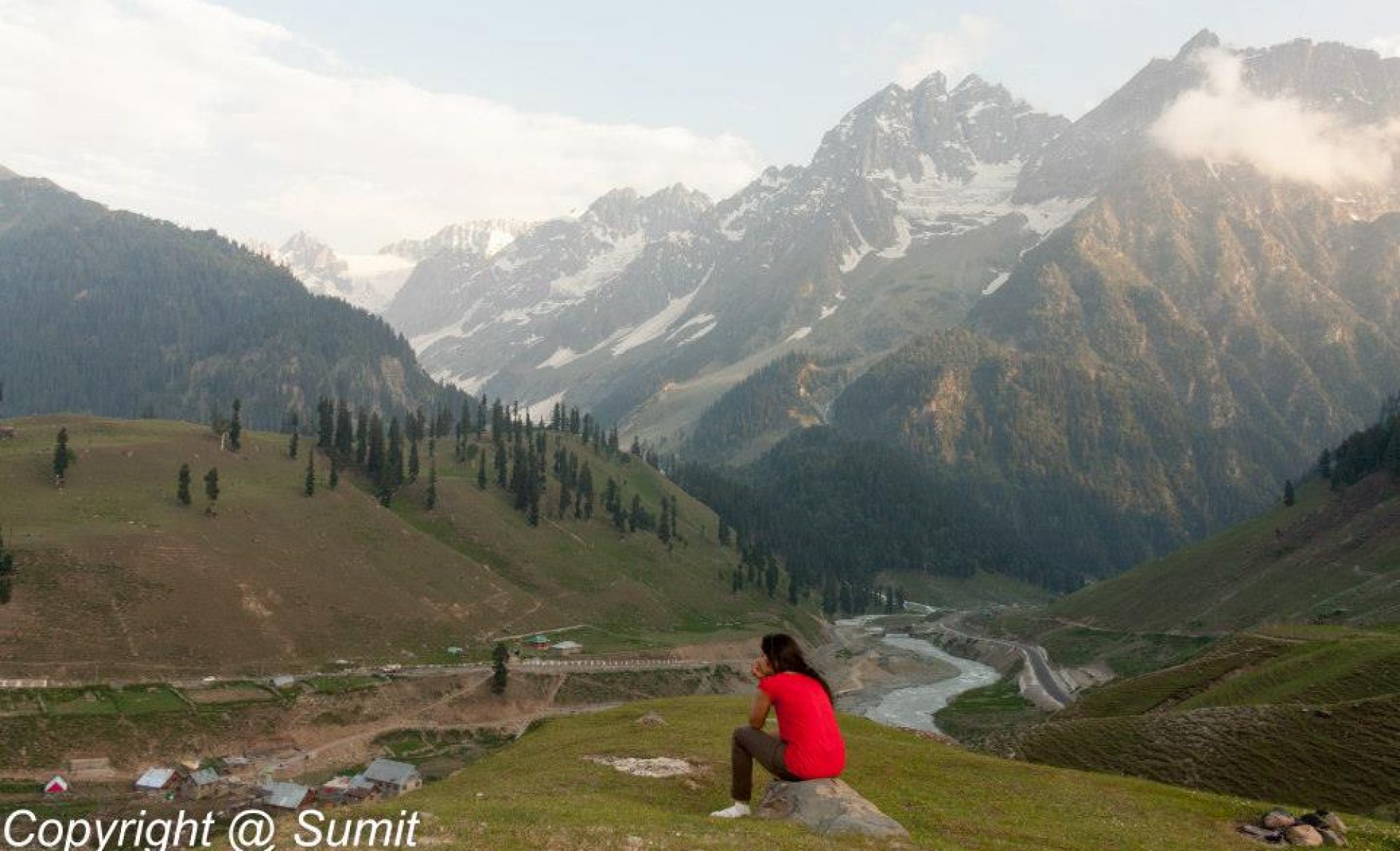
How to complete the inner incompleteness….

The Complete Power, Bhagavad Gita by Jaya Row

Founder of Vedanta Vision, Mrs. Jaya Row is one of the world’s most influential speakers on Indian philosophy. Backed by her corporate experience and 40 years of research on Vedanta, she motivates her audiences to live successful and happy lives. Clarity, wit and zeal are the hallmarks of her presentation, which comes forth beautifully in her book, The Complete Power.

The Complete Power is a simple read that unravels the power of the oldest and the grandest spiritual powerhouse i.e., Bhagavad Gita. The book is not merely a translation, but it provides applications of the principles in very practical way. She cites examples from our daily lives, like work, family, shopping, etc. This makes the book very relatable.

She presents the concept of Bhagavad Gita through 7 gems quoting relevant shlokas. Each gem takes you through the principles about how to practice 3 yoga –  karma yoga, bhakti yoga and gyan yoga. She explains the enormous truth of why one should become desireless in a very logical manner – she proves it that actually not giving up desires brings you more pain. When we think of desires, we ask ourselves, why shouldn’t I get a new dress, why shouldn’t I use the air-con on hot days if I can afford it? She says, we definitely shouldn’t give that up, what we must give up is the attachment to those desires. She makes difficult concepts easy to comprehend.

The knowledge of Bhagavad Gita is not unknown but converting that knowledge into wisdom requires careful craftsmanship. Mrs. Row in her book serves excellent pointers to think about that prompts us to look at our lives more closely, to give conscious thought to our constantly thinking mind.

We are all very familiar with the below verse which is presented as Gem 5 in The Complete Power, but Mrs. Row has brought forth the depth of the concept in modest words.

Gem 5

“One who does what one ought to do without depending on the fruit of action is a sannyāsī, a yogī. Not one with agni (ideal) or action.”

The author explains that even if a person’s goal is of higher level i.e. of self-realization, there can be a tendency of being result-oriented. Or some level of pride. Further she says, and I quote, “If you do not have a goal, you will not act. If you think of the goal while acting your action will be faulty and you will not succeed.”

She literally prescribes what one must do in order to absorb the simple principles of Bhagavad Gita. She ends the book with defining the Happiness Quotient and illustrating daily life scenarios for us to comprehend it.

As she describes in the introduction of the book, The Complete Power is not an exhaustive explanation of the wealth of knowledge contained in the Gita, but it surely is a very good start point if one starts becoming aware of one’s mind using the right trigger points illustrated in the book.

Arise, Awake.

Stop not till the Goal is reached.

Written by: Chahna D

Edited by: Milauni T

Gems from The Complete Power

Gem 1

I bestow yoga (spiritual enlightenment) and ksema (material success) to those persons who worship me with no other thought, to those always seeking Union.

Gem 2

O Arjuna, how has this despondency come over you in a crisis? It is un-Aryan, leading to neither heaven nor fame.

Gem 3

Having created humankind in the beginning along with yagna (sacrifice), Prajapati (the Creator) said, “By this may you prosper, let this be the Kamadhenu (wish-fulfilling cow) of your desires.

Gem 4

Fight, surrendering all actions to Me, focussing thoughts on the Self, without expectation, my-ness or frenzy.

Gem 5

One who does what one ought to do without depending on the fruit of action is a sannyasi, a yogi; not one without agni (ideal) or action.

Gem 6

Having totally abandoned all dharmas (attributes), take refuge in Me alone. Do not grieve; I will release you from all sins.

Gem 7

As the ocean which filled from all sides with waters entering it, remains still, so one in whom all objects of desire enter obtains peace, not the desirer of desires.

What’s your Ikigai?

Ikigai: The Japanese Secret to a Long and Happy Life, written by Fransec Miralles and Hector Garcia is the book intended to help you live a life that is fuller. Ikigai means flow, passion. Ikigai is what keeps us flowing.  Ikigai is what gives a purpose to our life. Ikigai is the force within us that keeps us going – no matter what.  It keeps the fire of passion alive within us.  With the modern city life and powerful forces and incentives (money, power, attention, and success) taking over us, we are constantly in a race, distracted and disconnected from our own self.

This book is a pathway to reconnect!  It is not a miracle, it is a simple practice.  Following a routine and being disciplinde are often under-rated by today’s generation, but remember, how strict our grandparents used to be? About waking up early, making our beds, etc? It all has a meaning, one that we have lost in today’s era.  We tend to do everything in our comfort zone, at our convenience.  In my view, that is still fine, but I strongly believe in having a routine of self-discipline.

The book highly stresses on these little things that we can do in our daily life to reconnect and achieve a flow. The book illustrates life of many people who have achieved a very strong connection with their Ikigai, however, as a family person, it might not be possible or even wise, to leave behind everything in search of our Ikigai.  The book guides us on how we can achieve this flow whilst still living the life that we have.

I am putting here a small checklist for you all to help you have a start point. These are things that I believe are do-able in our daily routine, however, you will need to read the book to gain deeper understanding of the importance.

Also, this is my accumulation of things based on what I think I can do with the busy home / work life, but you may have different view / priorities after reading the book.

In order to encourage more people, I would like to put this out as a challenge – The Ikigai Challenge.  You may choose to take this challenge and respond to me; in return, I will share my list with you.

  1. Give yourself a small challenge on regular basis

Learn something new, be it as simple as a new game, or an extension of a skill.

2. Exercise

Mild exercise every day. Yoga, pranayama, Pilates, walking etc. whatever that suits you. Just move!

3. Eating

Eat only till you are 80% full and minimise eating junk food.

4. Fasting

It is scientifically proven now that fasting is good for health. It helps cleanse the digestive system. I personally feel it also helps in boosting will-power.

5. Pray

Don’t have sit down and chant a big prayer (it does help in my view to create certain vibrations within ourselves and in our surroundings). However, starting by just small prayers will help us rebuild the lost connection or strengthen the weakened connection.

6. Keep yourself engaged

We tend to go on a thought trail, and it is often of worry and negativity. Engage yourself in an activity that will stop you from going on a thought trail. Water your plants, listen to music, etc. It doesn’t have to be an established activity. Just something little to take your mind off your thoughts.  Key is to be conscious of the thoughts and knowing when to stop thinking.

This is my checklist. I can’t do everything every day. But I tell myself that every little thing counts. The goal is to keep our body and mind active and engaged. According to the book, all these little things and habits help in achieving better physical and mental health, that will eventually help us find a flow. Once you identify your Ikigai, pursuing and nurturing it every day, will bring meaning to your life. The moment your life has a meaning, you will achieve a happy state of flow in everything that you do.

And this is the key to happiness, longevity, and health.  Like I said above, it’s not a miracle, it is practice.

Wishing you to find your Ikigai soon! Happy Reading- if you’re planning to pick this one to read or re-read.


Written by: Chahna D

Edited by: Milauni T

Vatta’s war series- An Interstellar fiction: Book review

We were emptying my husband’s desk at Clatterbridge Cancer Center as we were moving cities where I stumbled upon a pile of books, some fictional, some thriller, some sci-fi, etc left by a former student. I picked some randomly as all the authors and genres were new to me. One by one I started exploring them. Probably after a year or so I picked up Trading in Danger.

By the time, I finished reading it, I was a fan of Kylara Vatta. Least did I know that it was the first book of Vatta’s war series of 5 books. Desperately I started looking for more books and kindle came to my rescue. I read the second book, Marque and Reprisal; and Kylara Vatta took charge of the conversations with my husband. At the end of third book, Engaging the Enemy, I felt it necessary to pen down my thoughts.

Vatta’s series is all about interstellar trade, politics and wars. Elizabeth Moon has eloquently woven fiction with family issues, business, sister rivalry, relationships, military, wars and female protagonism. Having been a girl who used to be put in tough situations and then having seen them through, it was easy for me to relate with Ky. Youthful madness and crazy ambitions are traits we all have within ourselves although buried at more or less depths . Through Ky, I was able to live it all again.

The beauty about Moon’s writing is that even after completing the third book, I am equally eager to start the fourth book, Command Decisions, as I was when starting the second. She builds the plot very patiently yet intriguingly. Every book will have some action, arriving unexpectedly and of an advanced level than that in the previous book. The books end with a plot for the start of the next book, leaving the reader utterly curious.

After finishing Engaging the Enemy, I thought of giving it a break, let it sink and read something else before starting the fourth. I spent 24 hours in that endeavour but everytime I opened kindle, I felt the book four was calling me.

So here I am, embarking on an FTL (faster than light) flight to Cuidad (one of the planetary systems in Universe). Are you with me?

Book Review of SIDDHARTHA

Siddhartha, originally written in German by Hermann Hesse, first published in the US in 1951s, is translated in Gujarati by Deepak Soliya as well as in many other languages. Siddhartha is a fictional character during the time of Gautam Buddha who is on a journey of spirituality and self-discovery. Usually we come across people who renounce their materialistic life in search for a greater meaning of life. But Siddhartha was different. Born in a Brahman family, he was rigorously taught about scriptures, rituals and Hinduism. However, his thirst for spiritual knowledge was not quenched so he embarks on a journey to search for answers and thus becomes a monk. After spending some years as a yogi, he realises he needs to understand the worldly pleasures, fears and insecurities of a common man to really understand life. Thus, he renounces his monk-hood, gets involved in a relationship, becomes a shrewd businessman and engages himself in drinking & gambling.

Does he get what he seeks? Does he get the answers? Does he achieve true meaning of existence? Yes, he does, but to find out how, one needs to read this incredible literary work. Siddhartha is easily relatable to us because some of his beliefs, inner turmoil, questions and vision about spirituality are very natural to us commoners. He doesn’t believe in any gurus or in following footsteps of a learned one. He believes every individual must find his own unique path to spirituality. This thought process has been articulately described in his dialogue with Gautam Buddha when he refuses to join Budhha’s sangh.

We all know that the journey of spirituality is a journey inward. This is conveyed very creatively as a hidden gist, which comes out through Siddhartha’s life experience. Deepak Soliya has also provided in-depth analysis and his own interpretation at the end of every chapter making it an interesting dialogue.

Some take away thoughts –

  1. Knowledge can be passed, not wisdom.
  2. The world is whole, we shall not divide it into good or bad, evil or dark, love or hatred, violence or non-violence. We must learn to accept the wholeness of everything, in everyone. Every human is good and bad at the same time, what is different is that everyone is at a different point in the spectrum. There is good in a thief and evil in a monk.
  3. Truth has two sides like a coin. One must exist for the other to exist.
  4. It is good to have a goal, but having a goal makes one too focussed on the goal, makes one narrow minded and renders them to ignore things that are close to them. To have an open mind, to accept everything, to be able to flow like a river is something we need to learn. Instead of trying to seek something, we must try to become something.
  5. There is nothing like time. Universe is timeless. Past, present and future all exists at the same time. Past in our memories, present in present and future in our thoughts – just like a river which exists at her source, on her way and on her destination all at the same time, yet she is constantly flowing.

I would quote myself from my diary where I wrote some years back after returning from the trek of Kashmir Great Lakes in the Himalayas, “One must go through the journey of questions in order to comprehend the answers”.

Chahna D.

Tatvamasi – A different perspective to Indian culture

Tatvamasi. Literally meaning, it’s you! Belief, faith, strength, determination, love, gratitude, everything is you. It starts with you and ends with you.

Dhruv Bhatt has yet again created a masterpiece where he takes the reader through the century old, popular among believers, the Parikrama of the sacred river, Narmada (a river pilgrimage) and how that tradition- that faith is still holding strong. The book is narrated through an Indian-origin-American character who is a researcher and a non-believer. One who sees everything through a critic eye, questions every tradition and superstition. One who is like you and me. His journey from being a non-believer to becoming a devotee.

In this journey, the book brings forth some heart-touching facts about the rural/tribal community living in the areas along the riverside. One such startling experience described is – the villagers put some oil and oil lamps (diya) outside their homes every night for the pilgrims to massage their feet. Some conversations with Shashtriji and Gandu Fakir shake your very foundation. When asked if he believed in past births, Shashtriji replied, do you believe in this birth? Gandu Fakir being a non-hindu had undying faith in this Hindu tradition of worshipping a river. As he said, whether I am a Hindu or a Muslim, spirituality begins at my home. 

A story that will move you to the core and inspire you to, if not take the pilgrimage, at the very least, worship this great river once. Story that reveals the truth behind a diverse and vibrant country that is bound strongly by a force. One who has never visited India, never read or heard the mythological stories, Ramayana and Mahabharata, will still know about it. It is in the blood. This fact is so beautifully brought forth in the book that we start observing such minute behaviour of ours which sets us apart from other cultures. One such incident happened with me at work. An English colleague was sitting next to me, having a chat, when by mistake my feet touched him and as a reflex, I touched him lightly, took my hand to my head and apologised. He was surprised by this reaction although didn’t say anything. But that look on his face made me wonder that the belief of seeing God in fellow humans is so well imbibed in our behaviour. Many such beliefs that are interwoven between our culture and behaviour are eloquently described in Tatvamasi.

As I read Tatvamasi, I felt being born and brought up India, how little do I really know about our culture, ancestors and the scientific logics behind certain rituals. It is incredible to know how science and religion have been merged to reach the population. Without revealing much about Tatvamasi, leaving it for you to explore, I shall end my review with one last quote by Shastriji, “Have faith, not needing to define in what. Just have faith.”

Reva

The movie adaptation of this book has done excellent justice to the story. Capturing every crucial and soul changing incidents, the story has been modified a little to reach the greater audience. The direction, acting, screenplay and dialogues have been incredible in bringing forth the depth of the book. Even having moved once by the book, I was equally moved by the movie.

Drenched in Emotions – Book Review of Mane Varsaad Bhinjve by Dr. Sharad Thaker

Mane Varsaad Bhinjve literally means “I surrender myself in the showers of rain”. I feel writing a book review of a Gujarati novel is a welcome challenge. Written by an eminent and well-loved author Dr. Sharad Thaker, Mane Varsaad Bhinjve is a very unusual love story. Written in the year 2012, the novel takes you on a whirlwind emotional ride.

Can you love somebody so much that you would give them to another?

It is impossible, at least in my mind though. But Nupur makes it nearly possible. Why should Nikhar suffer because of her shortcomings? Nupur and Nikhar, madly in love, married against their family’s wishes, endure a dreadful journey. Albeit at a cost. A cost that Nupur is ready to pay. But what about Nikhar? Will he join Nupur in this madness? Does he love her as much as she does to sacrifice everything?

I am asking these questions not only to raise curiosity in your minds but also to share what I went through whilst reading this novel. The characters and its plot have yet not left my inner thoughts. And they come recurring as I ask myself the same questions. That is the beauty of the words in this book. Well, after a lot of meandering and pondering over- My answer is strictly in negation. No, I cannot do what she (Nupur) could accomplish in her heart. Can you? Read the book to know the journey of Nupur and Nikhar.

About the book

The plot of this story is interesting and expressive. The story is unusually refreshing yet predictive at some points. Though, the way story takes turn is completely volatile which keeps a reader glued till the very end. Notwithstanding that the story is more about an emotional journey of three people that the author wants to take the reader through than about the story. The readers will find themselves growing very close to these characters and would be able to feel their inner turmoil. The book is capable enough to move your heart in the spaces we might not know existed- and you don’t really leave the book even after finishing it.

Nevertheless, if you are an attentive reader, you may come across some innocent contradictions in the information. That however does not affect the emotions or flow of the story- yet may annoy a good reader. Moreover, the editing of the book is not meticulously done resulting in left out typos which become quite prominent at some places.

Dr. Thaker is well- known to pen down emotions beautifully, using a simple prose.  Here too, the choice of words and language reflect simplicity yet reflect the depth of the characterization.

About the author

Dr Sharad Thaker, a gynaecologist by profession, is a renowned novelist, columnist and a Gujarati litterateur. With more than three decades of writing, he is a doctor with a literary pen along with a carpel. With his roots in the city of Junagadh, Gujarat, he is widely read in his regular national newspaper weekly columns known as Doctor ni Diary (Doctor’s Diary) and Rann ma Khilyu Gulab (A Rose Grown in a Desert). It is tough to find a Gujarati literature reader who would have not read or heard of his columns. And yes, many readers (including I) deeply appreciate him for writing such stories that touch our hearts and push our thoughts to expand the vision of life.

Written by: Chahna D.
Edited by: Milauni T.

The One You Cannot Have – Book Review

I have read many, many books over more than a decade – English, Gujarati, Fiction, Thriller, Action, some non-fiction and always dreamed of writing a book review but never picked up a pen, until now (picked up my keyboard, in literal words!).

The book I recently read did not really touch my soul or leave a lasting impression like many other books have. But, today morning, without giving much thought, I simply opened a word doc and started typing. Perhaps because I am more confident in writing now or because this was an easy read, it was also easy for me to write a review. Nevertheless, I am stepping into a new genre of writing.

Name of the book: The One You Cannot Have

Author: Preeti Shenoy

As the title suggests, it is about an unfinished love story. A young girl and a young boy, Shruti and Aman, find magical love in their college days and spend the best 4 years of their lives. Bunking classes, grabbing every opportunity to be together, working on projects together, etc is surely something we all can relate to. Dreaming about having a future together, caring unconditionally for each other and understanding even a flick of an eye made them ‘made for each other’ soulmates. Only until life took its own course.

In present day, they both live different lives. Shruti is married to a very nice guy from her community chosen by her parents and Aman is wrapping up his 2 years of life in the U.K., which he had chosen as respite after his harsh break-up. Shruti is fairly happy with her marriage and has buried (or let’s say has tried very hard and she thinks she is successful until circumstances change) Aman and the time they had spent. On the other hand, Aman is still single and has failed any attempt to even think of a relationship.

Aman moves to Bangalore in the hope to start a new life, meets his old boss who is a friend (Vikram) and joins his company to help him get a new project hit the ground. Knowing of his return to India, Anjali contacts him well before he was to fly and fixes a date. Aman agrees reluctantly only to be polite and to get her off his back. Anjali is Deepika’s (Vikram’s wife’s) cousin, works at a magazine company as a writer. She has her own column and writes about day-to-day struggles / emotional journeys of women. One date leading to another, Aman and Anjali get along well, and Anjali has finally found a guy who fits all her requirements of a life partner. She gives out clear signals of being interested in a relationship, but Aman is terrified. He likes Anjali. After a lifetime, someone has genuinely made him laugh and made him feel important. He likes the upbeat, full-of-life, successful, independent and beautiful Anjali but his past, his pain stops him from making any advances.

Shruti, at the same time, faces a head-first fall in her marriage when Rishabh finds out about her relationship with Aman. Rishabh knows that the relationship ended before marriage but the fact that Shruti lied to him when he had asked her about being in any previous relationship, eats Rishabh from inside. He can no longer trust Shruti and feels to have been wronged and cheated. Shruti confesses, apologises, gets angry, becomes outrageous, tries everything she can think of, but nothing eases Rishabh’s pain. Rishabh’s parents’ visit during the same time complicates things even further. After being broken from inside for months, she finally decides to write to Aman. She strongly believes it is only him who can pull her out from this darkness.

What happens after is for you to find out by reading the book. The author has given excellent plot to the story by taking a reader through past and present times parallelly as that’s how real life is, isn’t it? We never really leave our past, it’s always with us – only buried, sometimes even forgotten, until something triggers it. The author takes us inside the minds of each key character and has put best effort to personify each of them. The language used is quite colloquial and some readers might find it naïve. The tone and tense of the language gets monotonous at many points and inclusion of a lot of not required / redundant information like literally describing a conversation in passive past tense frequently throughout the book can get to a reader. The author could have used that space to express deeper emotions and essence of conversation rather than simply translating it. I found those passages boring and empty. Having said so, the curiosity that was created kept me gripped on until I finished the book.

Have a happy read…

You can buy the book at https://www.amazon.co.uk/One-You-Cannot-Have/dp/9383260688/ref=sr_1_1?ie=UTF8&qid=1535099333&sr=8-1&keywords=the+one+you+cannot+have