Siddhartha, originally written in German by Hermann Hesse, first published in the US in 1951s, is translated in Gujarati by Deepak Soliya as well as in many other languages. Siddhartha is a fictional character during the time of Gautam Buddha who is on a journey of spirituality and self-discovery. Usually we come across people who renounce their materialistic life in search for a greater meaning of life. But Siddhartha was different. Born in a Brahman family, he was rigorously taught about scriptures, rituals and Hinduism. However, his thirst for spiritual knowledge was not quenched so he embarks on a journey to search for answers and thus becomes a monk. After spending some years as a yogi, he realises he needs to understand the worldly pleasures, fears and insecurities of a common man to really understand life. Thus, he renounces his monk-hood, gets involved in a relationship, becomes a shrewd businessman and engages himself in drinking & gambling.
Does he get what he seeks? Does he get the answers? Does he achieve true meaning of existence? Yes, he does, but to find out how, one needs to read this incredible literary work. Siddhartha is easily relatable to us because some of his beliefs, inner turmoil, questions and vision about spirituality are very natural to us commoners. He doesn’t believe in any gurus or in following footsteps of a learned one. He believes every individual must find his own unique path to spirituality. This thought process has been articulately described in his dialogue with Gautam Buddha when he refuses to join Budhha’s sangh.
We all know that the journey of spirituality is a journey inward. This is conveyed very creatively as a hidden gist, which comes out through Siddhartha’s life experience. Deepak Soliya has also provided in-depth analysis and his own interpretation at the end of every chapter making it an interesting dialogue.
Some take away thoughts –
- Knowledge can be passed, not wisdom.
- The world is whole, we shall not divide it into good or bad, evil or dark, love or hatred, violence or non-violence. We must learn to accept the wholeness of everything, in everyone. Every human is good and bad at the same time, what is different is that everyone is at a different point in the spectrum. There is good in a thief and evil in a monk.
- Truth has two sides like a coin. One must exist for the other to exist.
- It is good to have a goal, but having a goal makes one too focussed on the goal, makes one narrow minded and renders them to ignore things that are close to them. To have an open mind, to accept everything, to be able to flow like a river is something we need to learn. Instead of trying to seek something, we must try to become something.
- There is nothing like time. Universe is timeless. Past, present and future all exists at the same time. Past in our memories, present in present and future in our thoughts – just like a river which exists at her source, on her way and on her destination all at the same time, yet she is constantly flowing.
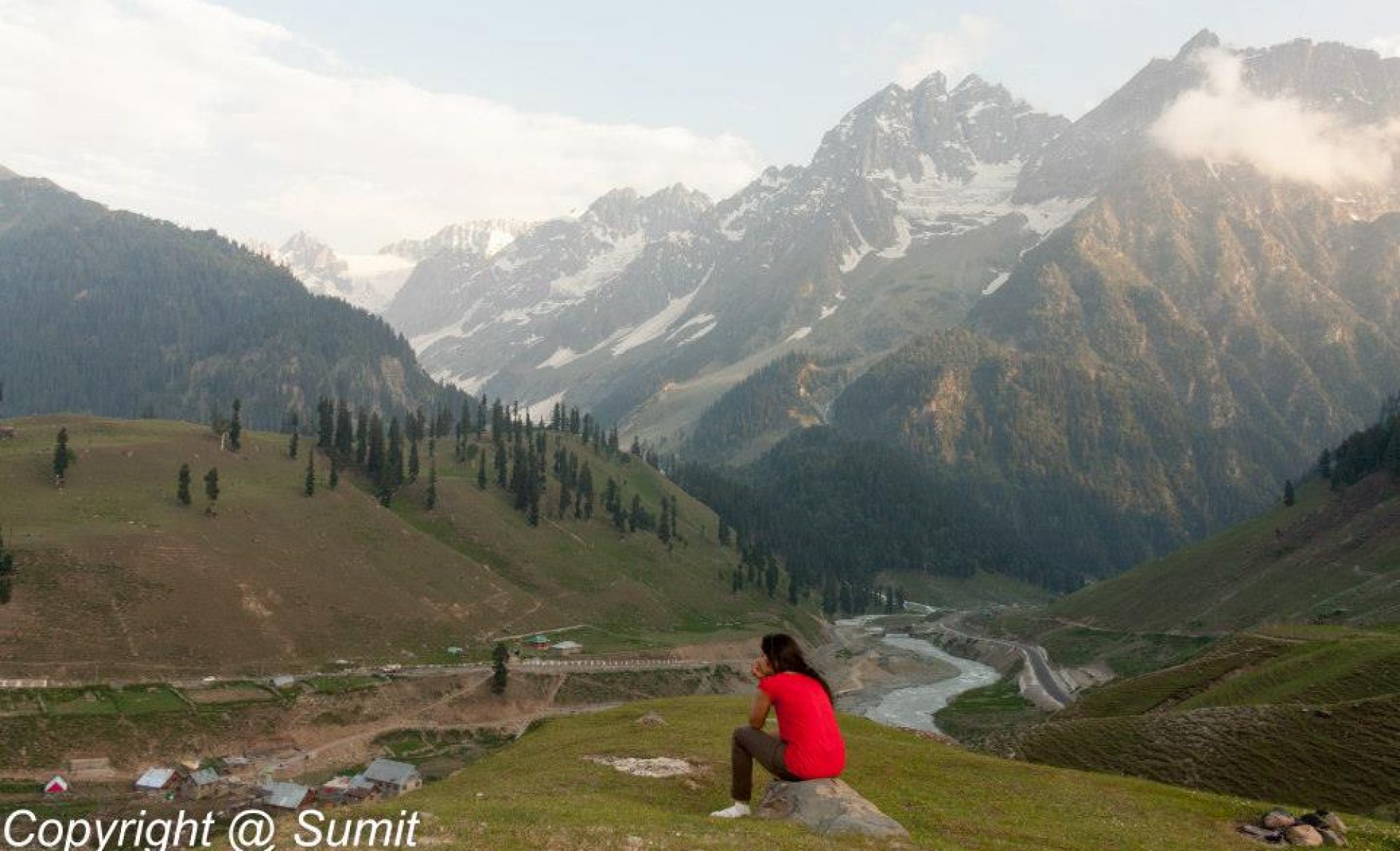
I would quote myself from my diary where I wrote some years back after returning from the trek of Kashmir Great Lakes in the Himalayas, “One must go through the journey of questions in order to comprehend the answers”.
–Chahna D.

 himalayaswithin
Very nicely summarised. Well done
LikeLiked by 1 person